Cracking the Code on Hotel Cancellations: What the Data Reveals—and What Hotels Can Do About It

Unveiling the Hidden Drivers Behind Hotel Cancellations: A Dive into Booking Behaviors
In an industry where margins are thin and seasonality plays a key role in the structure of your business, hotel bookings are a blessing and a gamble. All that surge in Colorado hotels during summer means money, but with great inflow comes a great chance of a leak that not only means loss but a potential to scramble your inventory and make all those best laid plans as immutable as a tuple - Cancellations.
Using a dataset of over 100,000+ bookings, I uncovered the insights to figure out if there is any pattern to these cancellations, as they are a big issue for revenue bleeding. I provide an action point based on these trends, backed by behavioral data, not just gut feeling. As with every insight, sometimes these insights might occur as common sense to someone experienced in the hotel industry, but at the very least, this article could help reinforce the wisdom gained through experience. And if you read it all through, you might just get a bonus tip - what is the best time to book that long-awaited and intricately planned trip at Destin (or Hawaii)?!
🧑🏽💻Coding and Analysis:
The dataset is downloaded from Kaggle, and more info can be found here. The dataset consists of roughly 30% bookings that resulted in cancellations. Overall, the data has ~119k rows, after cleaning and filling in the Null values. I analyzed the dataset using Python and, with the help of different visualizations, came up with multiple insights. The code is pretty straightforward if you know basic Python. What is interesting to me here is the factors that drive cancellations.
I built a binary classification model to predict whether a hotel booking would be canceled (is_canceled = 1) or not. I used a random forest model, achieving:
Accuracy: ~89.5%
ROC-AUC Score: 0.96 — indicating strong class separation between cancellations and non-cancellations.
Precision/Recall Breakdown:
Non-Canceled: Precision ~90.1%, Recall ~93.8%
Canceled: Precision ~88.5%, Recall ~82.1%
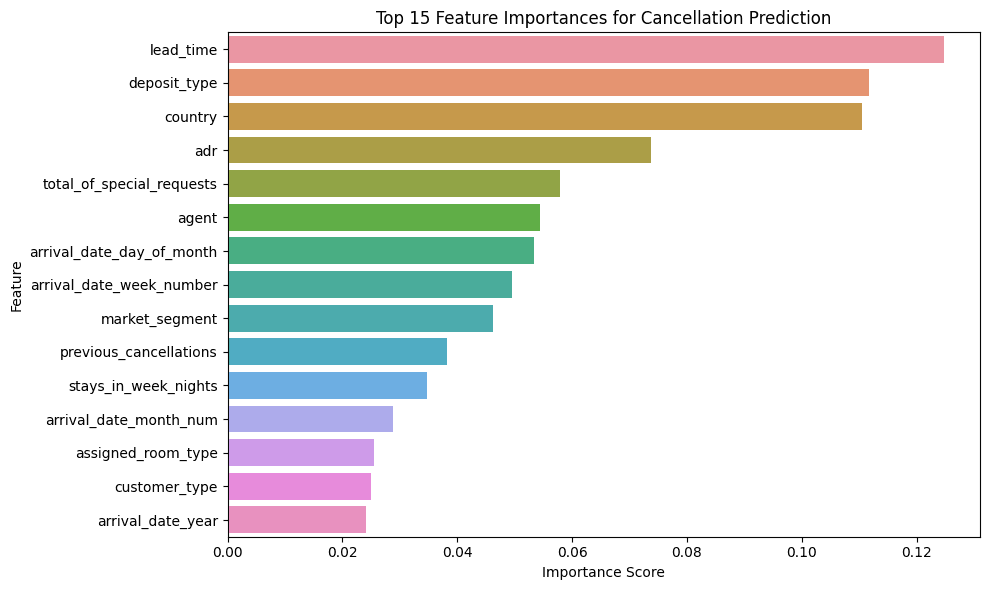
While the model’s precision was high, the more valuable output was the feature importance — identifying what made cancellations more likely.
📦Feature Importance (Shapley-like Interpretability)
The model's feature importance rankings highlighted the strongest predictors of cancellation. These included:
Lead Time
Deposit Type
Country
ADR (Average Daily Rate)
Special Requests
Booking Channel / Agent
These features were interpreted based on their contribution to the model’s predictive power and then mapped to operational levers in hotel management.
Action plan to utilize the insights:
🔄 Operational Levers
Feature | Action |
Long Lead Time | Trigger retention campaigns: pre-arrival nudges, loyalty incentives. |
High ADR | Ask for partial deposits, or premium cancellation terms. |
OTA / Agent Bookings | Build direct booking nudges or loyalty conversions post-check-in. |
Country Risks | Flag high-cancel regions for alternate confirmation workflows. |
Special Requests | Treat as a commitment signal — they’re more likely to show. |
💡 Recommendations for Hotels
Build a Cancellations Risk Index (CRI) for every booking — combine lead time, channel, ADR, and deposit type.
Refine Forecasting Models by adding adjusted cancellation probabilities — especially in peak months.
Geo-Target Policies: Flexible cancellation where it’s needed, strict where guests tend to follow through.
Value Over Volume: Not all bookings are equal. Prioritize customers based on both revenue potential and show-up likelihood.
🧭 Traveler Tip: When Is the Best Time to Book a Hotel?
Based on pricing trends and cancellation behaviors:
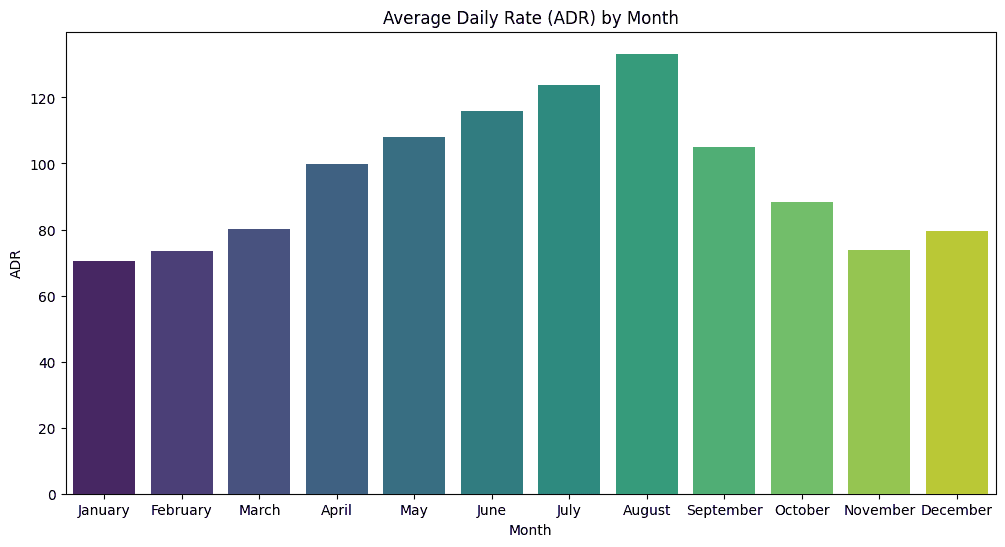
✨ The best time to book a hotel is 1–2 weeks before your stay, especially in November through February..
Why?
Average Daily Rate is at its lowest in these months, meaning better rates for the same inventory.
Shorter lead times = lower cancellation rates, so you're more likely to see available rooms that won't disappear due to speculative bookings.
Plus, hotels are often more flexible during off-peak months, offering perks like free upgrades, flexible check-ins, or loyalty incentives.
So book smart — not just cheap.
🧠 Final Thought
Cancellation is not just a lost booking. It’s a signal — of trust, intent, uncertainty, or price sensitivity. The smartest players in the hotel business will not just predict it, but design against it. Data doesn’t just tell us what happened — it tells us what to do next.